
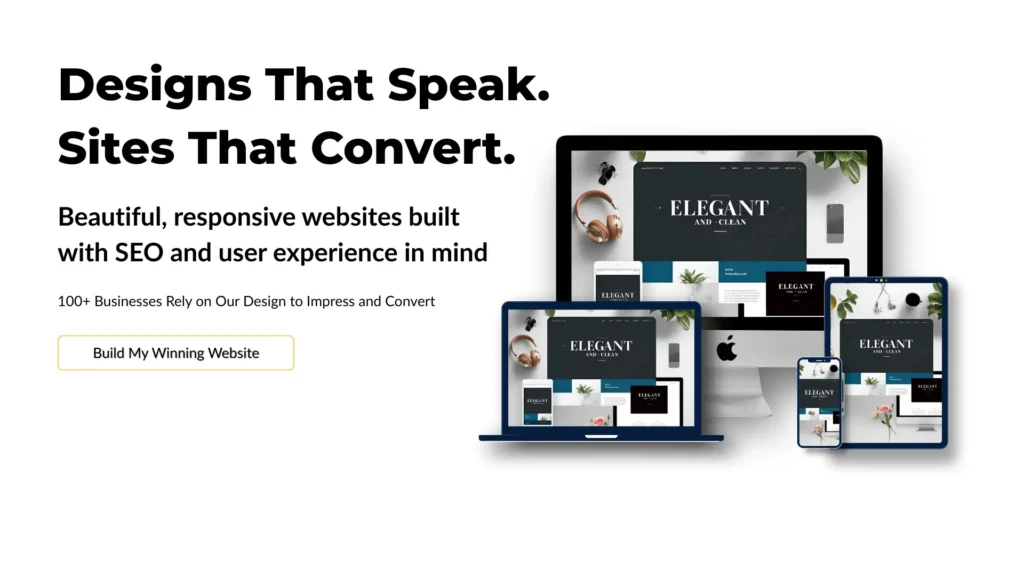
Website Design & Development Services That Drive Business Growth
Website design and development services should do more than – make your business look professional online. Your website needs to communicate – what you offer, make information easy to find, work smoothly across devices and guide visitors towards taking action.
At DigitalHats, we combine website strategy, user-focused design, development, SEO readiness and conversion thinking to build websites that support real business goals.
We don’t approach a website as just a collection of pages. We consider – how users discover your business, what they need to understand, how they navigate your website and what should encourage them to take the next step.
Whether you’re launching a new website, redesigning an outdated one or improving an existing website, we build with both user experience and business performance in mind.
What Our Website Design & Development Services Include
Every business has different website requirements. Our approach can include a combination of strategy, design, development and optimisation based on your goals.
Website Strategy and Planning
A successful website starts before the design begins.
We first understand your business, audience, offerings and objectives to determine what the website needs to achieve.
This can include:
- Website structure and sitemap planning
- Audience and user-journey considerations
- Page and content requirements
- Competitor and market research
- Conversion-path planning
- Navigation structure
- SEO considerations
- Website functionality requirements
The goal is to create a clear foundation before moving into design and development.
Website Design and UI/UX
Your website should look professional – but visual design is only one part of a good user experience.
We design websites around clarity, usability and the actions you want visitors to take.
Our website design process can cover:
- Page layouts
- User interface design
- Navigation and information hierarchy
- Responsive design
- Calls to action
- Conversion-focused page sections
- Forms and enquiry points
- Mobile-first considerations
- Visual consistency
- User experience optimisation
We focus on making important information easy to understand and important actions easy to find.
Website Development
Once the structure and design are established, we turn the experience into a functional website.
Our development approach focuses on clean implementation, usability, performance and future scalability.
Depending on the project, development may include:
- Business websites
- Service-based websites
- WordPress websites
- Custom website functionality
- Landing pages
- Blog and content sections
- Contact and enquiry forms
- Third-party integrations
- Content management systems
- Responsive website development
The technology should support the business rather than become the centre of the project.
SEO-Ready Website Development
SEO shouldn’t be something added after a website goes live.
We consider important SEO requirements during the planning, design and development stages so the website has a stronger foundation for organic search.
This can include:
- Search-friendly website architecture
- Logical URL structure
- Heading hierarchy
- Internal linking considerations
- Crawlable navigation
- Indexation considerations
- Image optimisation
- Mobile usability
- Page performance
- Structured data opportunities
- SEO-friendly content structure
A well designed website should make sense to both – users and search engines.
Looking for ongoing SEO? Explore our SEO Services.
Mobile-Responsive Websites
A website needs to work across the devices your audience actually uses.
We build responsive experiences – that adapt to different screen sizes and consider how navigation, content, forms, buttons and visual elements behave on smaller screens.
Mobile responsiveness is not simply about shrinking a desktop layout. It is about making the experience usable and intuitive – on every relevant device.
Website Performance
A visually impressive website can still create a poor experience – if it is slow or difficult to use.
We consider performance during development and optimisation, including areas such as:
- Page loading performance
- Image optimisation
- Efficient page structure
- Mobile performance
- Unnecessary scripts
- Core Web Vitals considerations
- Browser and device compatibility
Performance should support both – user experience and the website’s wider marketing objectives.
Conversion Focused Website Design
Getting visitors to your website – is only part of the challenge.
Your website should help visitors – understand your value and decide what to do next.
Depending on the business, we can optimise areas such as:
- Calls to action
- Enquiry forms
- Service pages
- Landing pages
- Contact journeys
- Trust signals
- Testimonials & reviews
- Product or service information
- Lead-generation elements
The objective is to create a clear path from visitor → understanding → action.
Website Redesign and Development
An existing website doesn’t always need to be replaced completely.
Sometimes the biggest opportunities are hidden in the – current website’s structure, content, design, performance or conversion journey.
Our redesign approach can address:
- Outdated visual design
- Poor navigation
- Mobile usability issues
- Weak conversion paths
- Slow page performance
- Confusing website structure
- Poor content hierarchy
- SEO limitations
- Inconsistent branding
- Underperforming landing pages
Before recommending a redesign, we look at what should be improved, retained or rebuilt.
Our Website Design & Development Process
We begin with your business model, audience, offerings, competitors and website objectives.
We establish the sitemap, page structure, content requirements, user journeys and key conversion points.
We develop page layouts and visual elements around usability, clarity, brand consistency and the intended customer journey.
The approved design is transformed into a responsive, functional website with attention to performance, usability and technical foundations.
We review the website across relevant devices and screen sizes and check navigation, forms, content structure, performance and other important elements.
After launch, the website can continue to evolve based on user behaviour, search performance, enquiries, conversions and changing business requirements.
What Makes a Business Website Effective?
A successful website isn’t determined by design alone.
It needs to bring several elements together:
- Clear positioning
- Intuitive navigation
- Useful and relevant content
- Strong visual hierarchy
- Mobile responsiveness
- Good performance
- SEO-friendly structure
- Trust signals
- Clear calls to action
- A logical conversion journey
A website can look impressive and still fail to generate business – if visitors cannot quickly understand what you offer or what they should do next.
Website Design and SEO Should Work Together
Design and SEO are sometimes treated as separate projects. They shouldn’t be.
Search visibility can bring relevant visitors to your website – while the website experience determines what happens after they arrive.
That is why we consider SEO during website planning rather than treating it as an afterthought.
A strong website should provide:
Search visibility → relevant landing page → clear information → trust → action
This creates a stronger connection between your website, marketing and business objectives.
Websites Built for Different Business Needs
Business Websites
Create a professional digital presence that clearly communicates your business, services and value proposition.
Service-Based Websites
Build clear service journeys that help potential customers understand your offering and make enquiries.
E-commerce Websites
Create product focused experiences – that make it easier for customers to discover products, evaluate options and complete purchases.
Lead-Generation Websites
Structure landing pages, forms, calls to action and supporting content around generating qualified enquiries.
Startup Websites
Establish a scalable digital foundation – that can evolve as your business, audience and offerings grow.
Website Revamps
Improve an existing website’s design, usability, structure, performance and conversion experience without rebuilding everything unnecessarily.
Why Choose DigitalHats for Website Design & Development?
We don’t believe in building websites simply to fill a project checklist.
Our approach brings together design, development, SEO and digital marketing thinking so your website can function as part of your wider growth strategy.
We focus on:
- Business objectives before visual elements
- User experience rather than unnecessary design complexity
- SEO readiness from the beginning
- Performance and mobile usability
- Clear website architecture
- Conversion-focused journeys
- Scalable website foundations
- Practical technology choices
- Continuous improvement after launch
The objective is simple: build a website – that works for your business, not just a website that looks good.
FAQs About Website Design & Development
The cost depends on the website’s size, functionality, design requirements, technology, integrations and level of customisation. A simple business website and a complex e commerce or custom website have very different development requirements. We recommend defining the website’s objectives and scope – before determining the investment.
The timeline depends on the – number of pages, content readiness, design requirements, functionality & approval process. A straightforward business website can be completed faster than a website requiring custom functionality, integrations or extensive content. We establish the scope and timeline – during the planning stage.
It depends on – what is limiting the current website. If the structure, content, technology and functionality are still useful, a redesign may be sufficient. If the underlying architecture or technology creates significant limitations, rebuilding may make more sense. The decision should follow an assessment – rather than automatically starting from scratch.
SEO should be considered before and during development – not only after launch. Website architecture, URLs, navigation, content hierarchy, internal linking, performance and technical accessibility can all affect future search performance. Ongoing SEO can then build on that foundation – after launch.
WordPress can be a suitable choice for many business websites – because it provides a flexible content management system and can support a wide range of website requirements. Whether it is the right choice depends on the project’s – functionality, scalability, content needs and technical requirements.
An SEO friendly website – has a logical structure, crawlable navigation, accessible content, appropriate URLs, clear headings, useful page content, internal links, mobile usability and sound technical foundations. SEO friendliness starts with how the website is planned and built – rather than being limited to adding keywords.
A website redesign can preserve and improve existing SEO – but it needs to be planned carefully. Important considerations include – existing URLs, redirects, indexable content, internal links, metadata, website structure and pages that already receive organic traffic. SEO should be considered throughout the redesign rather than checked only after launch.
Questions People Ask About Website Design & Development
Most business websites need clear information about – the company, its products or services, relevant supporting content, contact or enquiry options, trust signals & clear next steps. The exact pages should depend on – what customers need to make an informed decision.
Both matter – but they serve different purposes. Design affects how users understand and navigate the website – while functionality determines what the website can actually do. A successful website brings design, usability, performance and functionality together – around the user’s needs.
Website design can influence SEO – through information architecture, navigation, content hierarchy, mobile usability, page experience and internal linking. Design decisions that make content difficult to access or understand – can also create problems for users and search engines.
Start by understanding – where visitors come from and what they are looking for. Then make the relevant information easy to find, strengthen service or product pages, improve calls to action, reduce friction in enquiry forms and build trust with relevant evidence. Conversion optimisation should be based on user behaviour rather than simply adding more buttons.
Website performance is important for user experience and forms part of Google’s page experience considerations. However, speed should not be treated as an isolated SEO tactic. A website also needs useful content, good information architecture, technical accessibility and a strong overall user experience.
It should be built for both. Search engines need to discover and understand your content, while users need to find information, evaluate your offering and take action easily. Good website architecture can support both objectives – rather than forcing a choice between them.
There is no fixed redesign cycle. A website should be reviewed when its – design, technology, performance, usability, content structure or conversion experience – no longer supports the business effectively. Regular improvement can often be more valuable than – waiting for a complete redesign every few years.
Build a Website That Supports Your Business Growth
Your website is more than your digital brochure. It can be a search destination, brand experience, sales tool and lead generation channel.
If you’re building a new website or planning to improve an existing one, let’s create a digital experience around your business goals.
Talk to DigitalHats about your website design and development project.